Is Kabukicho Safe in 2026? Crime Data, Solo Female Tips & No-Go Areas
Is Kabukicho safe in 2026? YES for most tourists. Foreign visitor safety guide: 2025 Entertainment Business Act reforms, crime data, streets to avoid after midnight, solo female tips, tourist scams, emergency contacts, no-go areas map.

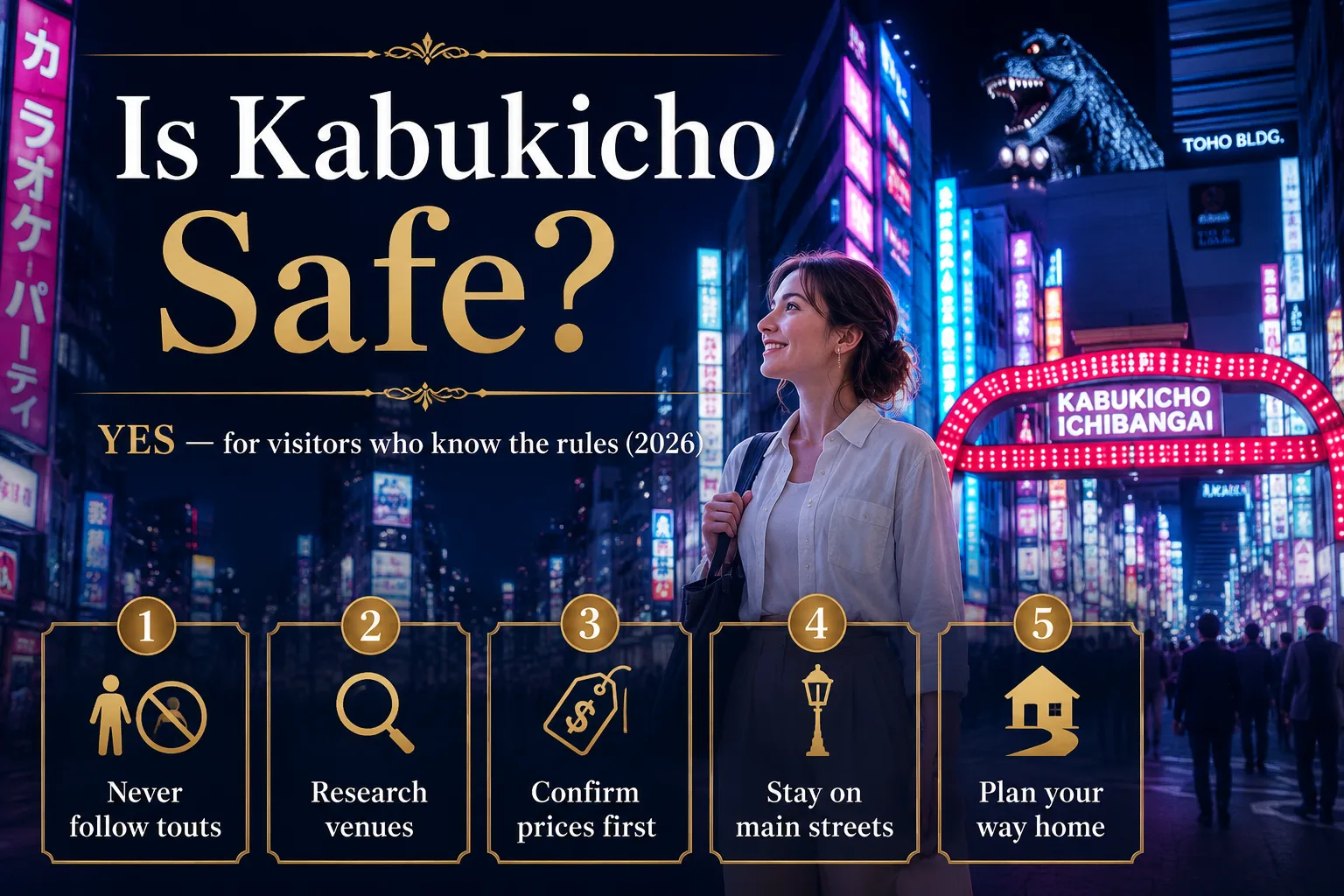
Introduction
"Is Kabukicho safe?"
Search for it on Reddit, TripAdvisor, or YouTube and you'll find conflicting answers ranging from "Tokyo's most dangerous neighborhood" to "totally fine, just walk around." So which is it?
Here's the honest truth in 2026: Kabukicho is generally safe for visitors who stay on the main streets, but it has specific scams and pitfalls foreign visitors should know about — and the real numbers are more nuanced than either side of the debate admits. This guide gives you the real information, with no exaggeration in either direction.
The Bottom Line
Yes, Kabukicho is safe for foreign visitors who:
- Don't follow strangers offering "cheap deals" on the street (touts)
- Stick to well-lit main streets at night
- Use reputable bars, clubs, and host clubs (researched in advance)
- Don't get blackout drunk
- Carry their passport and stay aware of surroundings
The "Kabukicho is dangerous" reputation is largely outdated—based on the 1980s–2000s, when organized crime had visible street presence. Today, heavy police patrols and security cameras have changed the district's street life — though recorded crime has risen four years in a row (see the numbers below).
Most tourists walk through Kabukicho without any problems whatsoever.
Reality vs. Reputation
The Old Reputation
In the 1980s and 1990s, Kabukicho had a reputation as Japan's "most dangerous neighborhood"—linked to yakuza (organized crime), street touts, drug deals, and overpriced clubs. Movies and TV reinforced this image. Some of it was true; some was Hollywood-style exaggeration.
The Modern Reality (2026)
Today's Kabukicho is dramatically different:
- Heavy police presence — Officers visible on most major streets, especially weekends
- 55 police street cameras — The Metropolitan Police operate 55 street surveillance cameras in Kabukicho (44 dome + 11 fixed), monitored around the clock from Shinjuku Police Station and MPD headquarters, plus the shopping-district association's own cameras
- 2025 entertainment law reform — In force since June 2025. It bans host clubs from intimidating customers into paying and from exploiting romantic feelings to make them order
- "Toyoko" is gone — The gathering spot for runaway teens beside the Tokyu Kabukicho Tower was fenced off in July 2024. If a guidebook still describes it, that guidebook is out of date
- English signage — Increasingly common, especially in major venues
- 24-hour transit nearby — Shinjuku Station is the world's busiest transit hub
In 2026, Kabukicho is closer to a slightly edgy but safe entertainment district than a dangerous neighborhood.
What the police statistics actually say
Opinions about Kabukicho are cheap. Here are the numbers. The Metropolitan Police publish recorded crime counts by neighbourhood block, and we tallied the Kabukicho entries.
| Kabukicho 1-chome | Kabukicho 2-chome | Total | |
|---|---|---|---|
| Recorded crimes, 2025 | 962 | 581 | 1,543 |
Two things matter more than the headline number.
First, the count is rising — 2025 was the fourth consecutive annual increase. So "Kabukicho is getting safer" is not quite right either.
Second, and more useful to you: of the 962 cases in 1-chome, 583 were non-intrusive theft — pickpocketing, bag-snatching from a table, and shoplifting. That is what actually happens to visitors. Violent crime exists but is concentrated in 2-chome, which is not where tourists go and not where the host clubs and restaurants are.
In practical terms: guard your bag and phone, not your life. The realistic risk in Kabukicho is losing your wallet, not being attacked.
Third, the serious cases lean towards 2-chome. 1-chome has 1.7 times as many crimes overall, but the picture flips for the cases that matter most:
| Offence type (2025) | 1-chome | 2-chome |
|---|---|---|
| Total | 962 | 581 |
| Violent felonies (murder, robbery, arson, rape) | 14 | 32 |
| Assault and injury | 151 | 108 |
| Burglary (break-ins) | 13 | 29 |
| Non-intrusive theft (pickpocketing, bag-snatching, shoplifting) | 583 | 295 |
| Other (fraud etc.) | 201 | 117 |
1-chome's high count is driven by shoplifting (181 cases vs 11 in 2-chome), theft of unattended belongings (33 vs 7) and fraud (55 vs 29) — a side effect of its shops and crowds. 2-chome has fewer cases, but a higher share of them are against people. That is why this guide tells solo women not to walk the back streets of northern 2-chome late at night.
Kabukicho is not even Shinjuku's top crime area. In the same 2025 data, Shinjuku 3-chome recorded 1,058 crimes, more than Kabukicho 1-chome (962).
What the data cannot tell you is the time of day. The police block-level statistics do not record when crimes happened. In practice, the same alley is a different place at 8 pm and at 4 am — decide by the hour first, then by the street.
Source: Metropolitan Police Department, "Recorded offences by municipality, block, offence type and method," FY2022–2025 (official page). Figures are published as provisional. Note that these are recorded crimes — offences never reported to police are not included, and the statistics do not break down by time of day.
What's Still True
- Touts still operate (just less visibly)
- Some scam venues exist (always research clubs in advance)
- Late-night drunks can be obnoxious (avoid them)
- The atmosphere is still adult-oriented (not for young children)
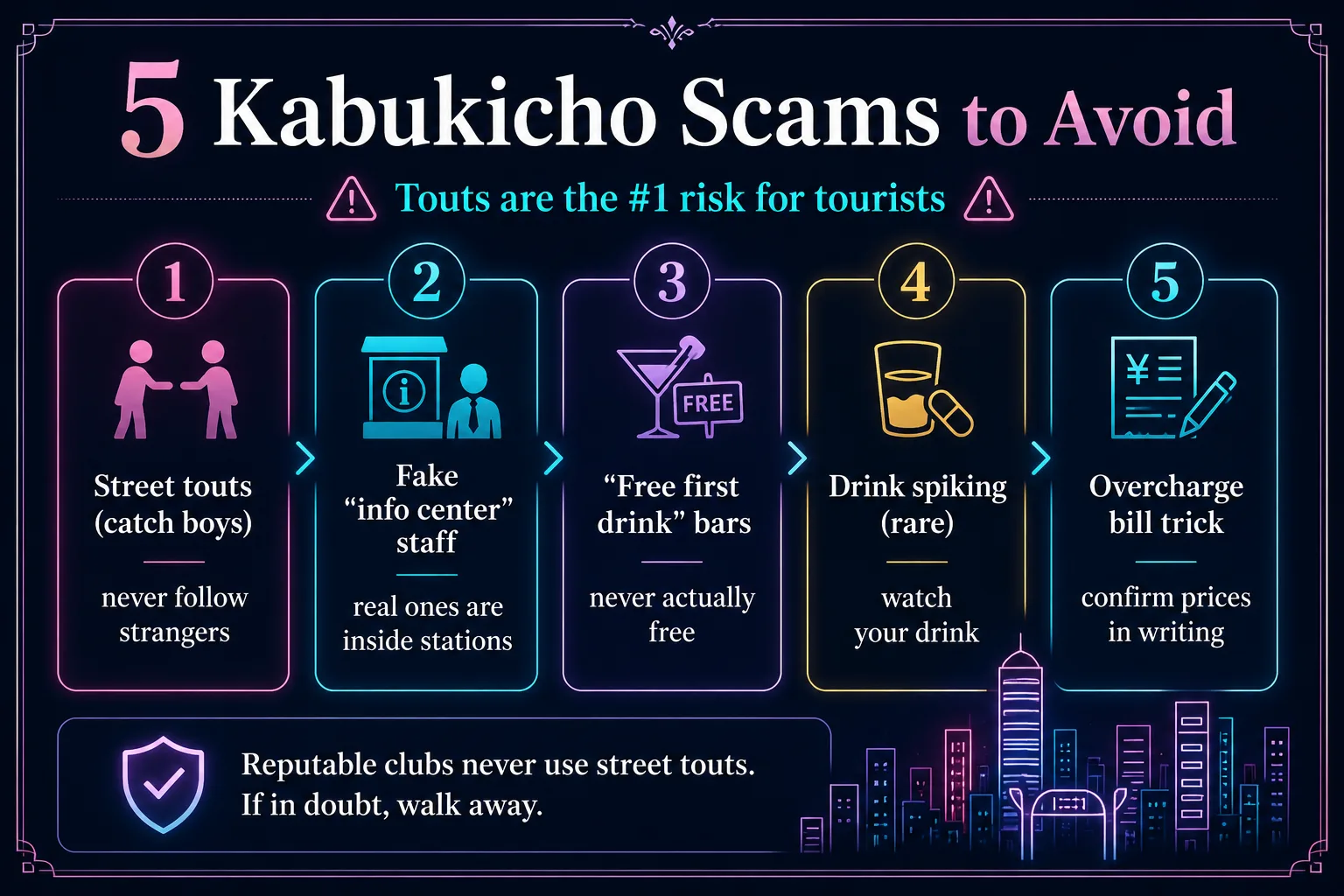
Common Scams to Avoid
Scam 1: The Street Tout (Catch Boys)
This is the single biggest risk for foreign visitors.
How it works: A friendly young man approaches you on the street, often speaking some English, offering a "cheap host club" or "best bar." He leads you to a club where:
- Prices are 5–10x normal
- The "first visit special" doesn't apply
- Bills mysteriously balloon
- Refusing to pay can lead to intimidation
How to avoid: Never follow anyone who approaches you on the street. No exceptions. Reputable clubs do not need touts. If a place is good, you'll find it via Google, HostRank, or a friend's recommendation.
Scam 2: The "Information Center"
Some street touts pose as "tourist information staff" with vests or signs. They offer to help you find a venue—and lead you to a scam venue.
How to avoid: Tokyo has real tourist info centers, but they're inside train stations and buildings, not on the street. Anyone offering tourism help on the street is suspicious.
Scam 3: The "Free First Drink" Bar
A man offers you a "free first drink" at a nearby bar. Once inside, you're charged ¥10,000+ for a small drink and pressured to buy more.
How to avoid: Free drinks from strangers are never free. If it sounds too good to be true, it is.
Scam 4: Drink Spiking (Rare but Reported)
There have been occasional reports of drinks being spiked at scam clubs to facilitate overcharging. This is extremely rare at reputable venues.
How to avoid: Only visit researched clubs. Never let a drink out of your sight at a sketchy venue. If you feel unwell suddenly, call for help immediately.
Scam 5: The "Overcharge Mistake"
Some scam venues hand you a bill that's "mistakenly" 3x what was agreed. They count on tourists not wanting to argue.
How to avoid: Only visit reputable venues. Always confirm prices in writing or via translation app before ordering. Never accept verbal "approximately" pricing.
Areas to Be Aware Of
Generally Safe Areas
- Kabukicho Ichibangai (一番街) — The main entrance area, well-lit, very busy, heavy police presence
- Around Shinjuku Toho Building / Godzilla Head — Touristy, lots of foreigners, very safe
- Yasukuni-dori (the main road) — Heavily patrolled, well-lit
- Around Kabukicho Cinecity Square — Open, public, monitored
Be More Cautious
- Small alleys deep in Kabukicho — Less monitored, fewer people, more touts
- Near Hanazono Shrine area at night — Some sketchy venues nearby
- Far north Kabukicho (away from Shinjuku Station) — Less foot traffic, watch your surroundings
In general: stay on main streets, especially at night, and you'll be fine.
Solo Female Traveler Tips
If you're a woman visiting Kabukicho alone—including for a host club—here are extra safety considerations:
Before You Go
- Tell someone your plans (which club, what time)
- Save the club's address and phone number in your phone
- Have a way home (Google Maps, taxi app, train schedule)
- Bring enough cash + cards to cover unexpected costs
- Wear comfortable shoes in case you need to walk
While You're There
- Stay aware of your surroundings—don't get tunnel-visioned on your phone
- Keep your bag in front of you in crowded areas
- Don't get blackout drunk, especially alone
- Don't accept drinks from strangers outside the venue you booked
- Trust your instincts—if something feels off, leave
Getting Home
- Last trains in Tokyo run until ~midnight—plan accordingly
- Taxis are safe and metered—use Japan Taxi or GO apps
- Uber is available but more expensive than local taxi
- Capsule hotels in Kabukicho are an option if you miss the last train
Emergency Contacts
- Police: 110
- Ambulance: 119
- Tokyo Police General Advisory Center (English available, not for emergencies): #9110 or 03-3501-0110
- Japan Helpline (English, 24/7): 0570-000-911
Host Club Specific Safety
Choosing a Safe Host Club
- Use HostRank to find clubs with verified reviews
- Stick to major groups (groupdandy, AIR GROUP, L's collection, Smappa! Group)
- Avoid clubs with no online presence
- Read recent reviews before booking
- Confirm the first-visit price in writing before going
During Your Visit
- Confirm the menu price before ordering
- Don't agree to anything you don't understand
- Use translation apps to verify totals
- Keep your card and phone secure
- Don't get drunk past your limits
Red Flags Inside a Club
If you notice any of these, leave immediately:
- Aggressive behavior from staff
- Pressure to order champagne
- Refusal to confirm prices
- Confiscating your phone or ID
- Locking doors
These almost never happen at reputable clubs but are warning signs of scam venues.
What If Something Goes Wrong?
You're Overcharged at a Venue
- Stay calm and ask for the bill in writing
- Use translation app to verify each charge
- If charges seem fraudulent, say you'll call the police ("keisatsu") and leave
- File a report at the nearest police box (koban)
You're Followed or Harassed
- Walk into a busy area (convenience store, train station)
- Ask for help from staff or police
- Call 110 if you feel unsafe
You Lose Your Passport or Wallet
- Report immediately at a koban (police box)
- Contact your embassy the next morning for passport replacement
- Cancel cards via your bank
You Drink Too Much
- Get to a safe place—convenience store, station, hotel lobby
- Drink water
- Call a friend or hotel for a ride
- Don't pass out in public
⚠ Practical Warning: Convenience Stores Don't Have Public Toilets
Unlike the rest of Japan, Kabukicho convenience stores (7-Eleven, Lawson, FamilyMart) do NOT allow customers to use the toilet. Many display "Toilet not available" signs, and many were built without public toilets at all. The combination of nightlife, drug-related issues, and sanitation challenges led store operators to close their toilets.
This is a Kabukicho-specific rule that catches every visitor by surprise. Plan your toilet stops:
- Before entering Kabukicho: Use Shinjuku Station or any restaurant
- Inside Kabukicho: Seibu-Shinjuku Public Restroom (24h, free, basic), McDonald's Seibu-Shinjuku (7:00–24:00, purchase required), Tokyu Kabukicho Tower 2F (clean, but only for customers of the tower's shops)
- Late night/early morning: The 24h options above; do not rely on convenience stores
For a complete list with maps, see Kabukicho Toilet Complete Guide.
FAQ
Q.Is Kabukicho safe to walk through during the day?▼
Very safe. Daytime Kabukicho is just an ordinary, slightly grimy entertainment district. Tourists walk through it constantly without incident.
Q.Is Kabukicho safe at night?▼
Generally yes, with caveats. Stay on main streets, don't follow touts, and don't get drunk alone. Most foreign visitors have no problems.
Q.Are women safe in Kabukicho alone?▼
Yes, with normal precautions. Solo female travelers visit Kabukicho daily without issues. Just follow the safety tips in this guide.
Q.Are there yakuza in Kabukicho?▼
Historically yes, much less visibly today. The yakuza have been weakened by police crackdowns and revised laws. You're extremely unlikely to encounter or be affected by them as a tourist.
Q.What about pickpockets?▼
In Kabukicho it is the most common crime visitors face. In 2025, 583 of the 962 recorded crimes in Kabukicho 1-chome were non-intrusive theft — pickpocketing, bag-snatching and shoplifting. Keep your bag zipped and in front of you, and never leave your phone or wallet on a table.
Q.Should I avoid Kabukicho entirely?▼
No. Kabukicho is one of Tokyo's most distinctive and culturally rich neighborhoods. Avoiding it means missing out on a unique part of the city. Just be smart about which venues you visit.
Q.Is it safe to visit a host club alone as a foreign woman?▼
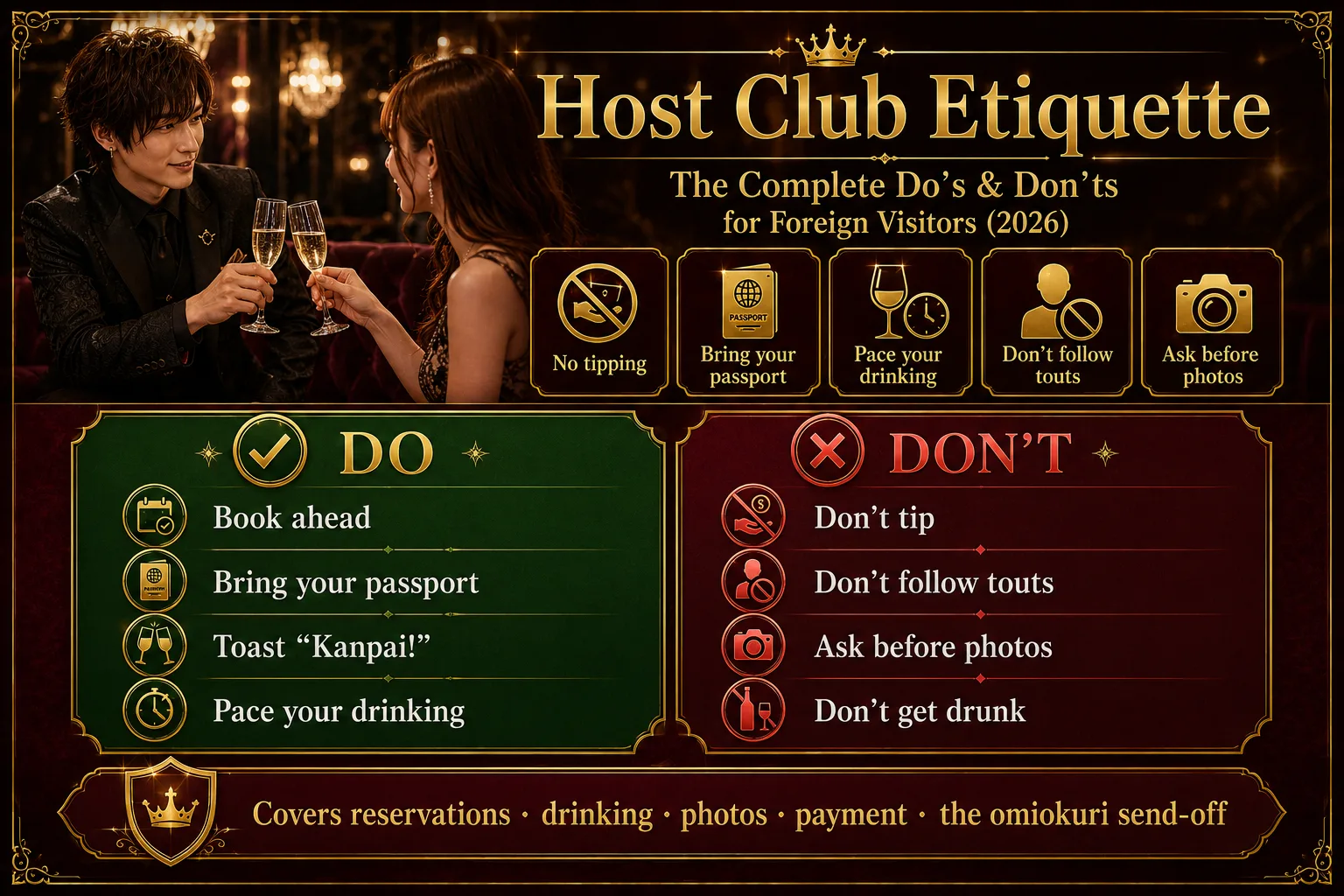
Yes, at reputable major-group clubs. See our foreigners host club guide for full details.
Q.What if I don't speak any Japanese?▼
You'll be fine. Use translation apps, stay polite, and stick to areas with English signage. Many staff in tourist-facing businesses speak some English.
Q.Are taxis safe at night?▼
Yes. Tokyo taxis are highly regulated, metered, and safe. Use the Japan Taxi or GO apps to book one easily.
Q.What's the worst thing that could happen?▼
Being overcharged at a scam venue (¥30,000–¥100,000) is the most common bad outcome. Violent crime is extremely rare. Use reputable venues and you'll never see this side of Kabukicho.
Conclusion
Kabukicho is safe for foreign visitors who use common sense. The neighborhood's old reputation has been mostly outdated by years of cleanup, regulation, and tourism investment.
The golden rules for staying safe in Kabukicho:
- Never follow street touts
- Research venues in advance
- Confirm prices before ordering
- Stay aware of your surroundings
- Have a way home planned
Follow these, and Kabukicho will be one of the most fascinating and memorable parts of your Tokyo trip—not a dangerous one.
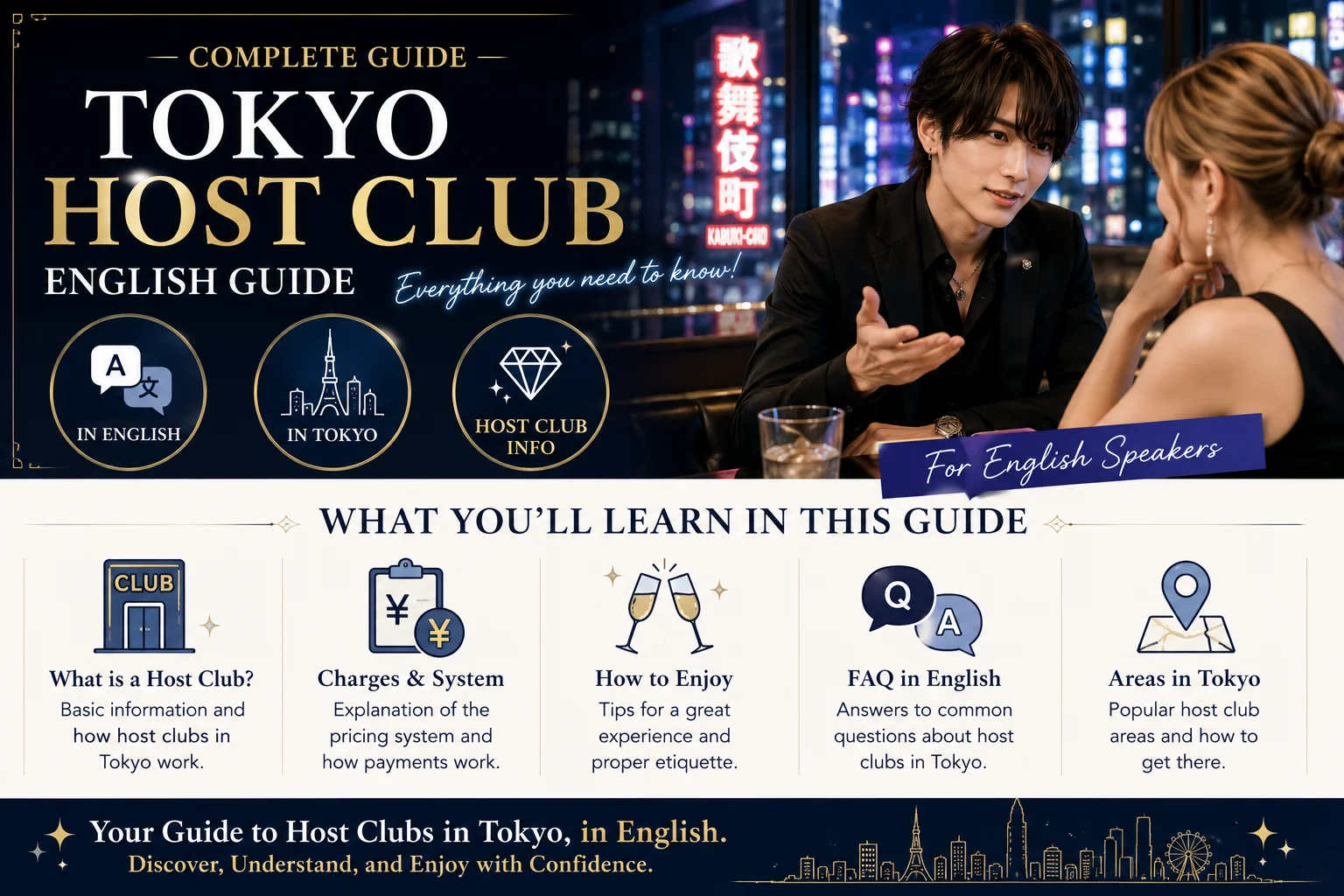
For host club specific guidance, see our complete English guide to Tokyo host clubs.
Other Practical Kabukicho Guides
Safety is just one piece of the puzzle. These practical guides cover the small but essential details that make your Kabukicho visit smoother:
- 🧳 Coin Lockers in Kabukicho — 6 nearby locations, 24-hour access, ¥300〜¥1,000
- 🚻 Public Toilets in Kabukicho — 24h availability, multilingual signage
- 📶 Free Wi-Fi Spots in Kabukicho — Where to stay connected without a SIM
- 💴 Foreign-Card-Friendly ATMs in Kabukicho — 7-Eleven, AEON, Shinjuku-Subnade
If you're walking around late at night, knowing where the nearest restroom or 24h locker is can be just as important as knowing which streets to avoid.
歌舞伎町で4年間ホストとして勤務した後、2024年に引退(31歳)。現役時代は中堅プレイヤーとして業界の光と影を経験。現在はナイトエンタメ業界のライターとして、元内部の視点から冷静に業界を分析している。
関連記事
この記事は ホスランクの編集方針 に基づき、業界経験者によって執筆されています。
⚖️ 評価ポリシー・サクラ排除メカニズム・ランキング算出式 →